
In the late 1950s and early 1960s, a drug called Thalidomide was marketed as a miracle. It was prescribed to pregnant women for morning sickness. Doctors believed it was safe. Advertisements described it as gentle, reliable, even harmless.
But behind the promise was a catastrophe.
300 Million Tablets were sold!
More than 10,000 babies in over 40 countries were born with severe limb deformities, missing arms or legs, damaged organs, blindness, and deafness. Families who had trusted their health systems were left shattered. Mothers carried lifelong guilt for simply following medical advice. Governments were forced to admit that drug approval systems had failed.
The world learned a painful lesson: new does not always mean safe.
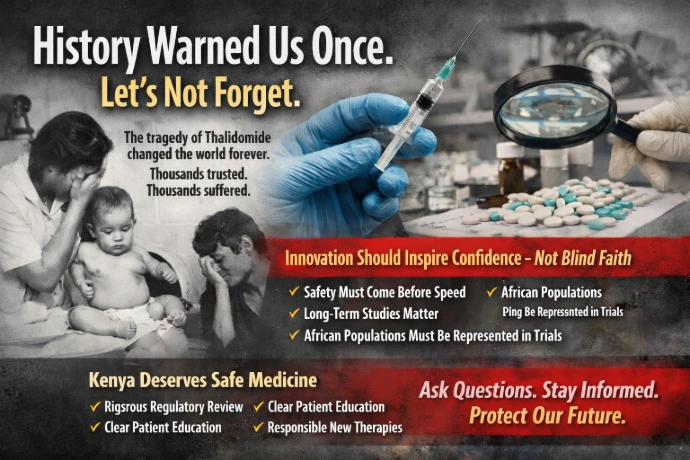
Why This Story Matters to Kenya Today
Kenya has made tremendous strides in public health — especially in the fight against HIV. Breakthrough treatments, including long-acting injectable therapies, are being introduced globally and discussed locally. These advancements are exciting. They promise convenience, adherence, and better viral suppression.
But excitement must never replace caution.
History shows that even well-intentioned innovations can carry unforeseen consequences. Drugs once hailed as “revolutionary” have later revealed rare but serious long-term effects. The tragedy of thalidomide happened not because doctors were careless — but because systems failed to fully understand long-term risks before mass use.
We must ask hard questions:
Are clinical trials inclusive of African populations?
Do we have long-term safety data?
Is post-marketing surveillance strong enough?
Are adverse effects reported transparently?
Kenya’s population is not a testing ground.
Innovation vs. Vigilance
This is not an argument against HIV treatment. HIV therapy has saved millions of lives. Long-acting injectables represent scientific progress. But progress without vigilance is dangerous.
Regulatory bodies like the Pharmacy and Poisons Board (PPB) must:
Demand robust, multi-year safety data
Monitor adverse reactions actively
Protect vulnerable groups, especially women of childbearing age
Healthcare providers must:
Counsel patients thoroughly
Explain benefits AND potential risks
Avoid blind adoption of “new” simply because it is new
Patients must:
Ask questions
Understand what is being introduced into their bodies
Report side effects early
A Call for Responsible Trust
The thalidomide tragedy reminds us that public trust is sacred. Once broken, it is hard to rebuild.
Kenya should embrace innovation — but not blindly. We must strengthen pharmacovigilance, invest in local research participation, and ensure that every new drug introduced has passed rigorous safety scrutiny.
We owe it to:
Our mothers
Our children
Future generations
Science must serve humanity, not experiment on it.
Let us remember the tears of the 1960s. Let us ensure that never again does a “miracle drug” leave a generation asking, “Why didn’t someone warn us?”
By Justina Mwongeli