
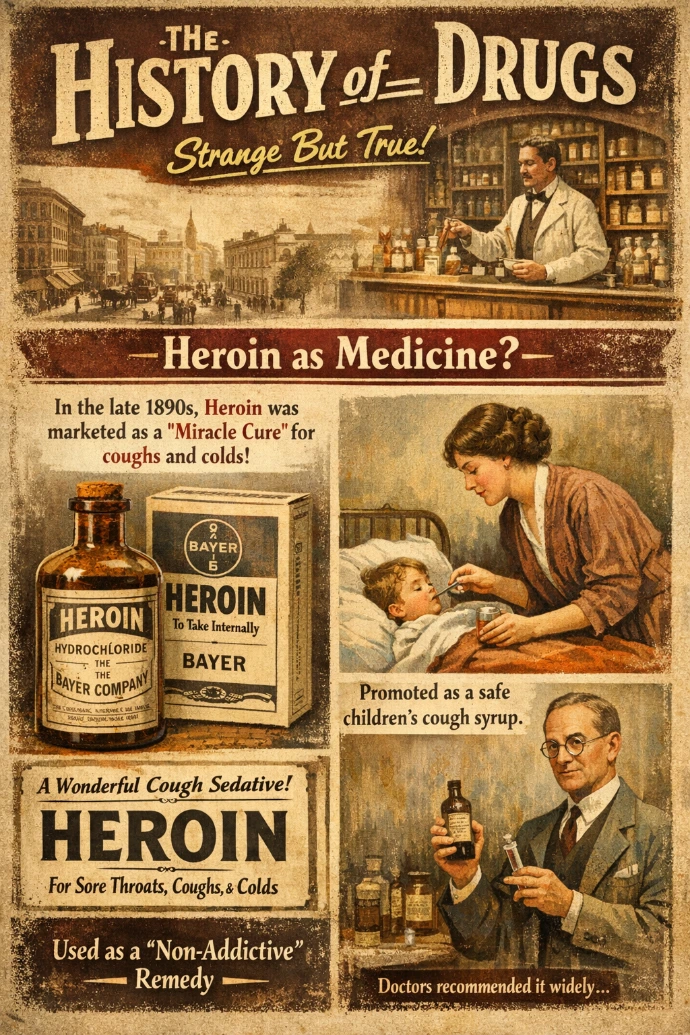
In the late 1800s, a coughing child would be tucked into bed. A worried mother would reach for a brown glass bottle from the cabinet. The label promised relief—soothing, safe, even modern.
Inside that bottle?
Heroin.
Yes—that heroin.
Long before it became synonymous with addiction and illicit drug trade, heroin was once hailed as a medical breakthrough, proudly displayed in pharmacies and prescribed by doctors.
Let’s rewind.
A New Wonder Drug Is Born
In 1898, chemists working for the German pharmaceutical company Bayer synthesized a compound from morphine called diacetylmorphine. Early tests suggested something remarkable:
• It suppressed coughing extremely well
• It relieved pain
• It seemed—at first—to cause less dependence than morphine
Bayer gave it a heroic name:
Heroin — from heroisch, the German word for strong or heroic.
The branding worked.
Advertisements praised it as a remedy for:
• Chronic cough
• Tuberculosis symptoms
• Pneumonia
• Bronchitis
• Children’s respiratory illness
Physicians prescribed it freely. Pharmacists dispensed it without hesitation. Some cough syrups contained it. Even pediatric formulations existed.
At the time, drug regulation was minimal. If something relieved symptoms quickly, it was embraced.
And heroin worked—terrifyingly well.
The Quiet Trouble Brewing
What doctors didn’t yet understand was how rapidly heroin converts into morphine in the body—and how powerfully it binds to opioid receptors in the brain.
Patients returned.
“I still need it.”
“My cough comes back without it.”
“Can I get another bottle?”
Soon, patterns emerged:
• People needed higher doses
• Withdrawal symptoms appeared
• Cravings intensified
• Patients who had never used opium before were suddenly dependent
Hospitals noticed it. Asylums reported cases. Newspapers whispered about a new type of drug habit.
The miracle was unraveling.
From Medicine Cabinet to Menace
By the early 1900s, physicians began sounding alarms. Heroin was not safer than morphine—it was often more addictive.
Governments responded slowly at first, but eventually regulation caught up.
In the United States, the Harrison Narcotics Tax Act of 1914 restricted opioid distribution. Other countries followed.
By the 1920s, heroin was increasingly banned for medical use.
The brown bottles vanished from shelves.
But the damage—and the underground demand—remained.
Why This Story Still Matters Today
This isn’t just a strange historical footnote.
It’s a powerful lesson in pharmacy:
How early clinical testing can miss long-term effects
Why drug regulation exists
The importance of post-market surveillance
How neurobiology shapes dependence
Why pharmacists/Pharmtechs are guardians—not just dispensers
What once looked like innovation became one of medicine’s most sobering cautionary tales.
Good day, all.
Justina Mwongeli