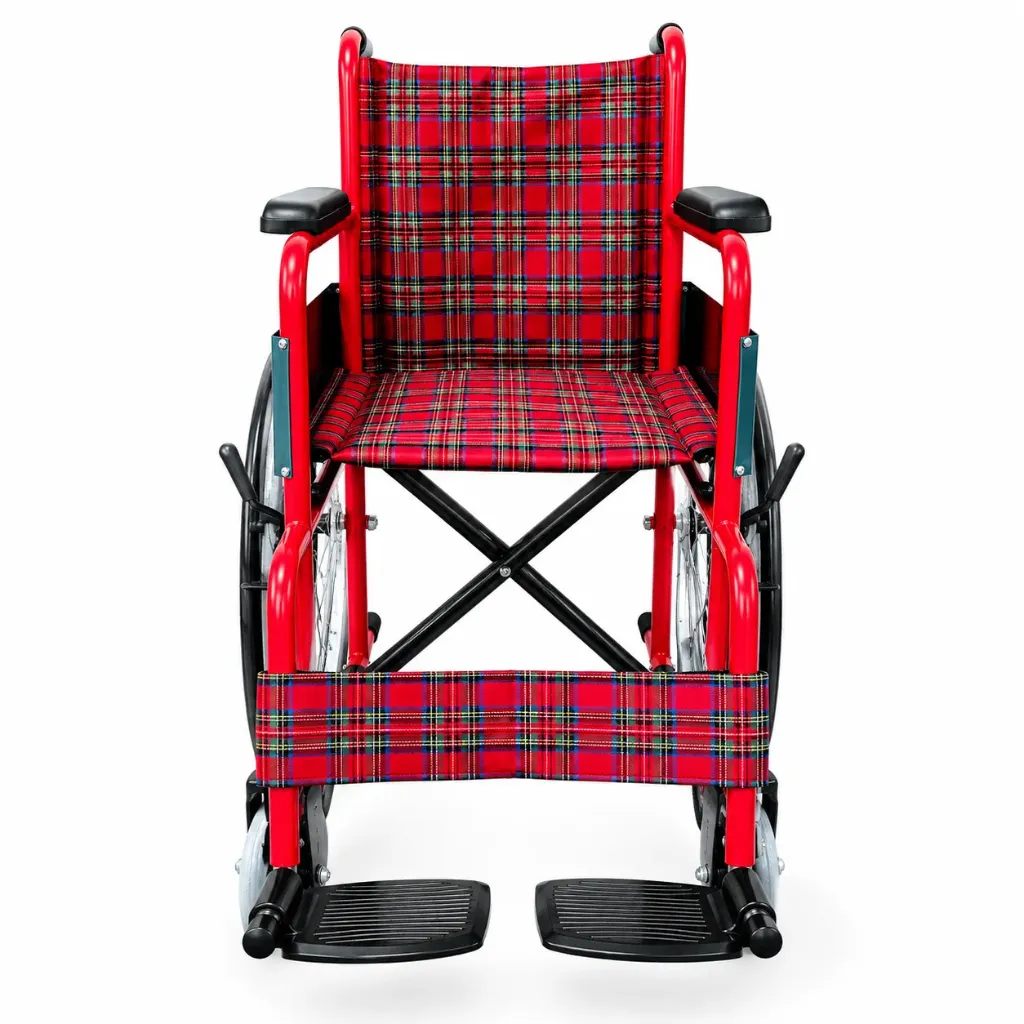
A pediatric wheelchair is a child-sized mobility aid designed to provide children with a suitable seating and mobility solution when walking independently is difficult or not possible. Compared with many adult wheelchairs, a child wheelchair is designed around smaller body dimensions and may include features such as adjustable footrests, supportive seating, folding frames and caregiver handles.
If you are looking for a pediatric wheelchair in Kenya, it is important to consider the child's height, weight, seat width, seat depth, posture and level of mobility before purchasing.
A pediatric wheelchair is a manual wheelchair designed specifically for children. It provides mobility and can be used at home, school, rehabilitation centres, hospitals and other environments.
Depending on the model, a children's wheelchair may have a lightweight or steel frame, adjustable footrests, padded seating, large rear wheels, front castors and a folding mechanism.
Current Kenyan listings show several pediatric wheelchair configurations, with prices and specifications varying significantly between models.
Depending on the model, a child wheelchair may include:
Child-sized seat and frame
Padded seat and backrest
Folding frame for storage and transportation
Adjustable or detachable footrests
Fixed or removable armrests
Large rear wheels
Front castors for maneuverability
Push handles for caregiver assistance
Manual hand rims on self-propelled models
Adjustable components on selected models
Durable metal or aluminium frame, depending on model
Safety brakes
The exact features vary by manufacturer and model, so specifications should be confirmed before ordering.
A children's wheelchair can be used for mobility at home, school, rehabilitation facilities and other suitable environments.
When selecting a wheelchair for a child, the seat should provide enough room for comfortable positioning without being excessively wide. The footrests should also be positioned appropriately for the child's leg length.
For children who need additional postural support, a standard pediatric wheelchair may not provide all the required positioning features. In such cases, a specialized seating or cerebral palsy wheelchair may be more appropriate.
A child wheelchair for special need can provide mobility support for children with physical disabilities or conditions that affect walking, balance or lower-limb function.
Depending on the child's requirements, specialized models may include:
Adjustable seating
Head support
Lateral trunk support
Pelvic positioning
Adjustable footrests
Reclining backrest
Tilt-in-space adjustment
Harness or positioning straps
Not every child requires all of these features. A physiotherapist, occupational therapist or other qualified professional can help determine the appropriate seating and positioning requirements.
An adjustable pediatric wheelchair can be useful when a child requires changes to the seating position or when the chair needs to accommodate growth.
Possible adjustable components include:
Seat width
Seat depth
Backrest height
Footrest height
Armrest position
Headrest
Lateral supports
The extent of adjustment depends on the model. Always check the manufacturer's adjustment range before purchasing.
Important measurements can include:
Hip width
Lower-leg length
Back height
Overall height
User weight
Use the manufacturer's sizing guide where available.
Make sure the wheelchair's stated maximum user weight is suitable for the child.
Some children can propel themselves using the rear wheels, while others require a caregiver to push the wheelchair.
If the child has significant positioning needs, look for appropriate head, trunk and pelvic support rather than choosing a standard chair based on price alone.
For growing children, adjustable components may provide greater flexibility than a fixed-size chair.
A folding children's wheelchair can be easier to transport in a vehicle and store when not in use.
Check the wheelchair before each use.
Apply the brakes before transferring the child.
Position the child centrally on the seat.
Secure the feet on the footrests.
Adjust the positioning supports where fitted.
Make sure clothing or other items are clear of the wheels.
Release the brakes only when the child is ready to move.
Apply the brakes whenever the wheelchair is stationary.
Caregivers should follow the manufacturer's operating instructions for the specific wheelchair.
Never exceed the manufacturer's weight capacity.
Make sure footrests and armrests are properly secured.
Inspect wheels, brakes, frame and fasteners regularly.
Do not use a damaged wheelchair until it has been inspected.
Keep the child's hands and clothing away from moving wheels.
Use positioning straps and supports according to the manufacturer's instructions.
Children with complex postural or mobility needs may benefit from professional wheelchair assessment.
The pediatric wheelchair price in Kenya varies depending on the wheelchair's size, frame, adjustability, accessories and intended use.
Current 2026 Kenyan listings show a broad range. Ultrascope Medical Supplies lists a paediatric wheelchair at KSh 12,000, while Wheelchairs Kenya lists a pediatric wheelchair from KSh 15,000. Dynamic Kenya currently lists a pediatric wheelchair at KSh 14,500, reduced from KSh 16,500.
Marketplace listings also show pediatric wheelchair prices around KSh 15,990–KSh 28,500, depending on the model and seller.
Therefore, buyers may encounter pediatric wheelchair prices in Kenya from approximately KSh 12,000 upward, while specialized adjustable or supportive children's wheelchairs may cost considerably more.
Always confirm the current price, dimensions, weight capacity and included accessories before ordering.
If you are looking for a kids wheelchair for sale in Kenya, compare the complete specifications rather than price alone.
Check whether the quotation includes:
Wheelchair frame
Seat cushion
Armrests
Push handles
Positioning straps
Headrest or lateral supports where required
Delivery
Assembly
Fitting or adjustment
Warranty
The child's measurements should be confirmed before ordering to avoid purchasing an incorrectly sized wheelchair.
Note: Exact dimensions, weight capacity, frame material and accessories vary between models. Confirm the manufacturer's specifications before purchase.
Current Kenyan listings show pediatric wheelchairs from approximately KSh 12,000 to KSh 28,500 for various models, while specialized pediatric or positioning wheelchairs may cost more.
A pediatric wheelchair is a child-sized wheelchair designed to provide mobility and seating support for children who have difficulty walking independently.
A children's wheelchair is designed around smaller body dimensions. It may have a narrower seat, smaller frame and child-specific adjustment ranges compared with an adult wheelchair.
Some models are adjustable, allowing selected components such as footrests, seat dimensions or back supports to be changed. The adjustment range varies by model.
Yes, depending on the child's needs. Some children can use a standard pediatric wheelchair, while children requiring significant postural support may need a specialized wheelchair.
Important measurements include the child's hip width, seat depth, lower-leg length, back height and weight. The manufacturer's sizing information should also be checked.
Yes. A suitable pediatric wheelchair can be used at school and other community environments, provided the chair is appropriate for the child's mobility and the environment.
Many manual pediatric wheelchairs have folding frames, but this varies by model. Check the folded dimensions if the wheelchair needs to be transported in a vehicle.
Product Name: Pediatric Wheelchair Kenya
Product Category: Children's Wheelchairs
Alternative Names: Pediatric Wheelchair, Child Wheelchair, Kids Wheelchair, Children's Wheelchair
Operation: Manual
Primary Function: Child mobility and assisted transportation
Users: Children
Available Configurations: Standard and adjustable models
Suitable Environments: Home, school, hospital and rehabilitation settings
Availability: Confirm current stock, size and specifications before ordering
These other products might interest you
Allow the use of cookies from this website on this browser?
We use cookies to provide improved experience on this website. You can learn more about our cookies and how we use them in our Cookie Policy.