
Cover: AI-generated illustration of a fictional hospital conversation; no real facility or patient is depicted.
THE MAESIO JOURNAL · HEALTH, FAITH & PATIENT CHOICE
Faith built many of Africa’s hospitals. Who protects patient choice when those hospitals are the only practical option?
The hospital sign says everyone is welcome.
The patient assumes that includes her medical needs.
Sometimes, the difficult conversation begins only after she has travelled, paid, queued and explained something deeply personal.
“Do you offer this service?”
The answer depends partly on who owns the building.
Here is the uncomfortable question: when a hospital serves an entire community, how far should its religious beliefs determine the care available to people who do not share them?
In Kenya and across Africa, that question deserves a serious public conversation.
First, give credit where it belongs
Faith-based healthcare institutions have earned their place in African healthcare. Many operate where public services are stretched and commercial investment is limited.
Kenya’s Ministry of Health reported that 319 faith-based facilities were among the providers contracted under the new social health insurance arrangements in November 2024. These institutions are part of the country’s healthcare infrastructure—not a footnote to it. [1]
Their contribution deserves recognition. It also deserves scrutiny.
Gratitude should not require patients to stop asking questions.
A hospital can be open to everyone while offering different choices
Religious identity can shape which reproductive services a facility provides.
A Kenyan family-planning programme paper published in 2019 described Catholic facilities as offering fertility-awareness methods and identified gaps in family-planning provision across faith-based facilities. These are historical findings, not a current audit of every religious hospital in Kenya. [2]
For a patient seeking a contraceptive method that a facility does not provide, the consequences may be practical and expensive: another journey, another consultation and another day away from work.
“Go elsewhere” sounds straightforward when elsewhere is nearby. It sounds different when elsewhere requires money you do not have.
A choice that exists only for patients who can afford to travel is an unequal choice.
Is this really a monopoly?
We should use the word carefully.
A large hospital network is not automatically a monopoly. Neither is a mission hospital responsible for every weakness in the surrounding public health system.
Research has examined how Catholic hospital affiliations and mergers can restrict reproductive services, particularly in the United States. That evidence should not be presented as proof of an equivalent merger pattern in Kenya or across Africa. [3]
The African question may be less about a dramatic corporate takeover and more about practical dependence.
If one institution is the only accessible, affordable provider, its policies can shape a community’s options without any merger taking place.
That is a policy concern worth investigating—not a finding of unlawful monopoly.
Kenya’s Constitution belongs in this conversation
Kenya’s Constitution protects access to healthcare, including reproductive healthcare, and states that a person must not be denied emergency medical treatment.
Article 26(4) also provides specified circumstances in which abortion is permitted, including where a trained health professional considers emergency treatment necessary or the pregnant patient’s life or health is in danger. It does not create unrestricted access to abortion. [4]
How those protections interact with institutional religious policies requires careful legal and clinical assessment.
But the public question is legitimate: what should a patient be able to expect from a hospital participating in a publicly financed healthcare system?
My position is that public purchasing should require clear service information, robust emergency arrangements and workable pathways to lawful care.
A patient should discover a hospital’s restrictions before a crisis—not in the middle of one.
Miscarriage care deserves accuracy, not slogans
It would be misleading to say Catholic hospitals categorically prohibit miscarriage treatment.
Catholic healthcare ethics guidance distinguishes between different pregnancy complications and permits treatment in a range of circumstances. A Catholic Health Association analysis, for example, describes treatment after fetal death as morally permissible while discussing more complex distinctions in other situations.
That is United States guidance; it does not establish what any Kenyan hospital does. [5]
The relevant questions are specific: what treatment is available, who makes the decision, how quickly can it happen, and what happens if the facility cannot provide it?
Patients deserve answers that are understandable outside an ethics committee.
East Africa is not one religious policy zone
In Uganda, St. Daniel Comboni Hospital’s own service description includes natural family planning. That tells us something about that institution, not every Ugandan faith-based provider. [6]
In Tanzania, research involving predominantly Protestant church communities found that engagement with religious leaders could improve knowledge and support for family planning. Faith can expand access as well as constrain it. [7]
Kenyan and Zambian faith-based organisations have also participated in family-planning advocacy initiatives. [8]
Africa contains different laws, denominations, institutions and clinical practices. Any continental argument that erases those differences is too convenient to be trustworthy.
End-of-life care needs a more honest vocabulary too
Opposition to assisted dying is not the same as opposition to pain relief, palliative care or every decision to stop burdensome treatment.
Published United States Catholic directives permit foregoing disproportionate treatment and support relief of pain, while rejecting euthanasia and assisted suicide. Those directives should not be assumed to govern African facilities. [9]
Families need clear explanations of local law, clinical options and the hospital’s policies. They should not have to decode theology while sitting beside someone they love.
What would fair accountability look like?
A reasonable starting point would be:
- Tell patients early which services are unavailable and why.
- Protect emergency care through clear, lawful clinical protocols.
- Make referrals usable, with attention to urgency, transport, cost and receiving-facility capacity.
- Examine service access when ownership changes, rather than reviewing finances alone.
- Publish public-funding conditions so communities understand what contracted facilities must provide.
- Strengthen public alternatives, so essential access does not depend on one institution’s policies.
These are proposed safeguards, not a description of obligations already uniformly enforced across Africa.
The patient is more than a guest in someone else’s beliefs
Faith-based hospitals can preserve a religious identity while being transparent about its consequences for patients.
Governments can value those hospitals while asking difficult questions about access. And patients can appreciate excellent care while questioning a restriction.
The woman at reception should not need to win a theological debate to understand her options.
When a hospital becomes a community’s only practical door, the rules behind that door become everybody’s business.
Editorial and health disclaimer
This article presents public-interest commentary and general information, not medical or legal advice. It does not allege misconduct by any named facility or establish that a hospital network is a monopoly. Services, laws and policies vary by institution and country. Historical studies and overseas religious directives are identified as such and should not be treated as current policies for all African hospitals. Seek qualified professional advice for individual care decisions.
Sources and further reading
The numbered links throughout the article lead to the Ministry of Health, Kenya’s Constitution, published research and the cited institutions’ own materials. Sources reviewed on 31 October 2026; historical figures retain their original dates.
Know your options. Start an informed conversation.
Explore selected reproductive-health testing and prevention products from Maesio. These listings are a separate product-information section; no product resolves an emergency or replaces a professional consultation. Ask our team about suitability, instructions, expiry and current availability.
OraQuick HIV Self-TestHIV SELF-TESTING · ORAL FLUID A listed oral-fluid self-test option. Follow the instructions supplied with the exact kit, including when to read the result. | Home HIV 1/2 Test CassetteHIV SELF-TESTING · FINGER-PRICK Listed with buffer, lancet and alcohol swab. Confirm the supplied model is intended for self-use and follow its sample and disposal instructions. |
HPV Self-Collection KitSAMPLE COLLECTION · LAB TESTING A collection kit, not an instant HPV result. Confirm self-sampling suitability, the receiving laboratory, compatible HPV test, sample transport and any separate testing fees before use. | Trust Classic CondomsPREVENTION · BARRIER ESSENTIALS Lubricated latex condoms. For shared sexual devices, use a new suitable condom between partners and follow device instructions. Barriers reduce risk; they do not eliminate every STI risk. |
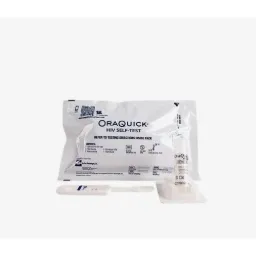
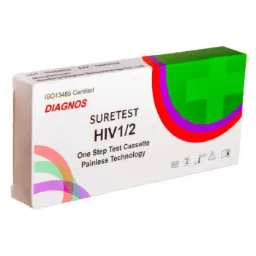
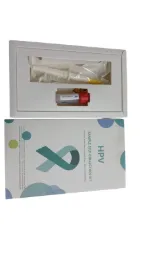
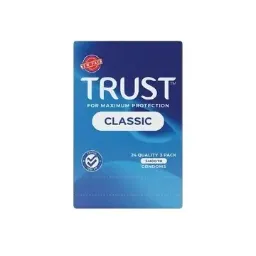
A test is a first step. Know the next one.
HIV: A reactive self-test requires confirmatory testing at a healthcare facility. A negative result may miss a recent infection during the window period; follow the kit guidance and seek professional advice about retesting.
HPV: Self-collection requires a compatible laboratory pathway and clinical follow-up. A collection kit is not an instant result or a diagnosis of cervical cancer.
Different products answer different questions. An HIV test does not test for every STI. Condoms reduce risk but do not eliminate all STI risks. Product availability does not establish suitability for an individual.
WhatsApp is for product enquiries and support. For urgent symptoms or an emergency, seek medical care immediately.
MAESIO PHARMACEUTICALS LTD
Care for you. Supplies for better care.